Welcome.
Here you'll find my latest photography projects from around the world, thoughts on development, and more information about my work and areas of expertise. I'm based in Toronto, Canada and am available for assignments.

Here you'll find my latest photography projects from around the world, thoughts on development, and more information about my work and areas of expertise. I'm based in Toronto, Canada and am available for assignments.

A recent global project, together with the United Nations Foundation, featuring stories from around the world of the effort to end polio.
This multimedia feature shows how Rwanda will eliminate hepatitis in the next five years - another health success for the country.
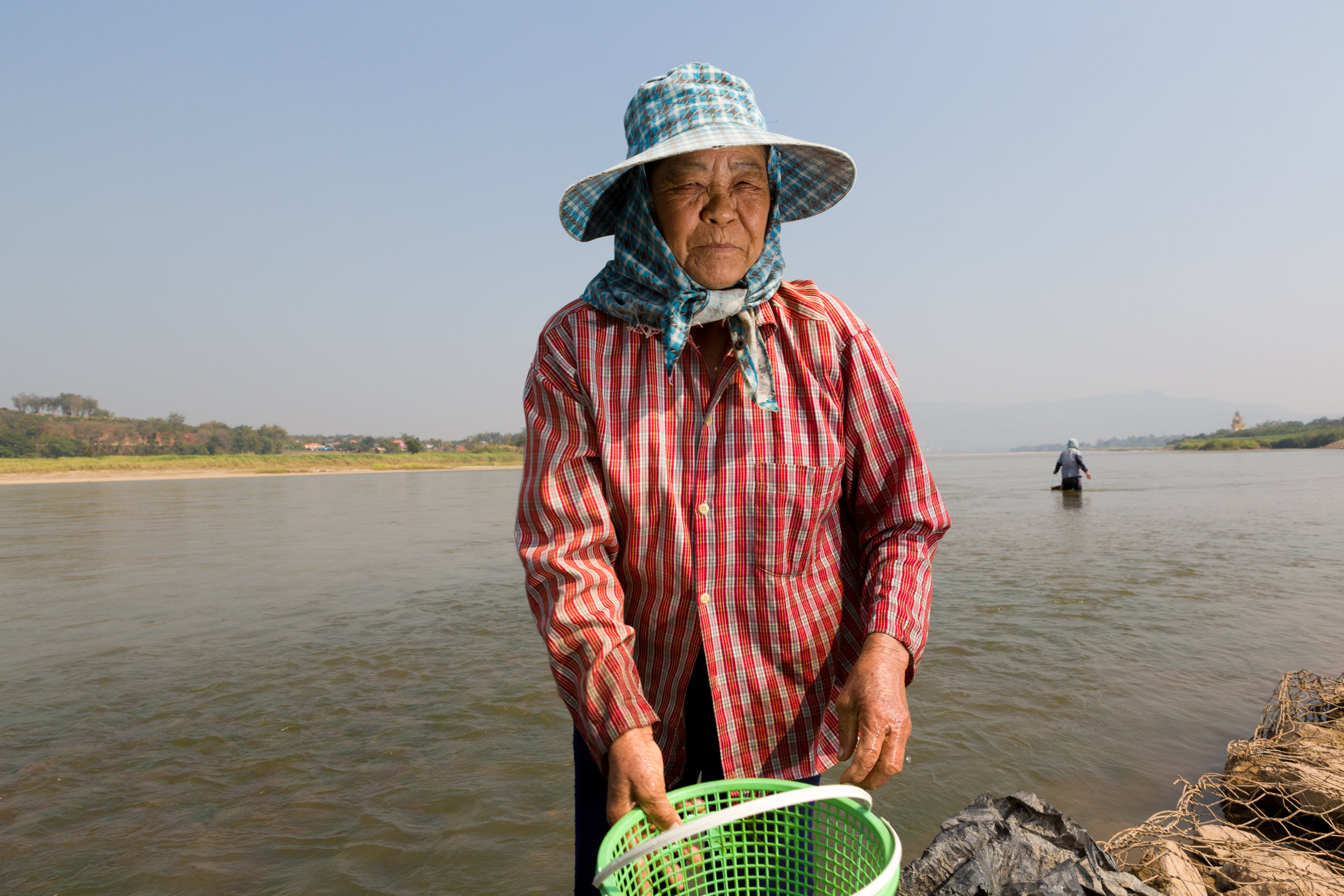
A series about women who live on the Mekong river. They reflect on their lives, their countries, and the ever-changing Mekong river.
Dr. Dong Xueshu, a medical entomologist, examines one of the hundreds of species of mosquitoes he has identified in Yunnan Province. Yunnan Institute for Parasitic Diseases, Pu'er Simao, Yunnan. April 2019.
Meng La County CDC staff demonstrate how to conduct indoor residual spraying. Trained technicians spray the insecticide on walls inside people’s homes. After a blood meal, Anopheles mosquitoes resting on those walls absorb the insecticide and die. Mohan Village, Meng La County, Yunnan Province. April 2019.
Xu Shiyan (in the back), works with colleagues Li Chunxin (with ponytail) and Wu Linbo to test blood samples for malaria parasites. Yunnan Institute of Parasitic Diseases, Pu'er Simao, Yunnan Province, China. April 2019.
Community members wait to see a nurse at a health centre in Kaliakoir sub-district. Gazipur District, Bangladesh. August 2019.
Families gather at a community centre in Kaliakoir sub-district to have their children vaccinated. Bangladesh was recently verified as having controlled hepatitis B, due to several years of high coverage with hepatitis B vaccine. Gazipur District, Bangladesh. August 2019.
Razia Sultana, a health worker, explains why women of childbearing age should be vaccinated against tetanus. The Clostridium tetani bacterium live in the everyday environment, and can infect a newborn baby and the mother if the baby is born in unsanitary conditions. Boktarpur village, Kaliganj, Gazipur District, Bangladesh. August 2019.
A child receives a vaccine containing hepatitis B protection. An independent expert committee at WHO SEAR verified that Bangladesh reached the goal of controlling hepatitis B by 2020. Kaliakoir, Gazipur District, Bangladesh. August 2019.
Young women walk home together after they've received a tetanus vaccination. The vaccine protects both the mother and the newborn from deadly tetanus during childbirth. Bangladesh eliminated maternal-neonatal tetanus in 2008 through high coverage of tetanus vaccine amongst women of reproductive age. Boktarpur Village, Kaliganj, Gazipur District, Bangladesh. August 2019.
A young woman waits to be vaccinated against tetanus. Vaccination in her reproductive years will protect her and her babies from the disease. Kaliakoir, Gazipur District, Bangladesh. August 2019.
Community health assistant Iata Akter, reviews the routine immunization session she and her colleagues have just provided, with Dr. Prosun Roy, a WHO surveillance medical officer, Gazipur District, Bangladesh. August 2019.
Dr. Prosun Roy is a WHO Surveillance Medical Officer, responsible for Gazipur district just north of Dhaka. He offers technical support to district health workers to plan and monitor immunization sessions, and also investigates potential cases of vaccine-preventable disease such as measles. Kaliganj, Gazipur District, Bangladesh. August 2019.
Kids walk home together after a routine immunization session in their village. Young babies were vaccinated against several diseases including polio, measles, hepatitis B, diptheria and whooping cough , while young women were vaccinated against tetanus. Kaliakoir, Gazipur District, Bangladesh. August 2019.
Laboratory biotechnologist Agrippine Mukarurangwa prepares to test blood at a Kigali laboratory of the Rwanda Biomedical Centre. During hepatitis screening campaigns, this laboratory receives hundreds of samples for viral load testing. Kigali, May 2019.
A nurse squeezes a few drops of blood to screen for hepatitis infection. One reason it’s possible to eliminate hepatitis C in Rwanda is because of rapid diagnostic tests that cost just $1 each. Those who are positive for hepatitis C will be offered treatment with a 95% cure rate. Rwamagana, Rwanda. June 2019.
A nurse takes a pinprick blood sample from a person who is being tested for hepatitis C. The rapid diagnostic test costs only $1, and a person can find out their hepatitis C status in about twenty minutes. A counsellor will advise of their results. This affordable rapid diagnostic test is one tool that is allowing Rwanda to aim to eliminate Hepatitis C by 2024. Rwamagana, Rwanda. June 2019.
A nurse tells a man the results of his rapid diagnostic test for hepatitis. These tests are free-of-charge to the public, and will be administered more than four million times in the next five years in Rwanda. Rwanda’s hepatitis C elimination plan will avert about 35,000 premature deaths and more than 10,000 new hepatitis C infections. Rwamagana, Rwanda. June 2019.
Workers at the Rwanda Biomedical Centre’s medical warehouse load a truck destined for a hospital about 45 minutes north of Kigali. Supplies of direct-acting antivirals (DAAs) for treatment of hepatitis C will be distributed and available at each of the 504 health centres in the country, so that people can receive treatment and care close to home. Kigali, May 2019.
Augustin Nsengiyumva is a vaccine nurse at the Rwamagana hospital. He learned he had hepatitis C when he was screened during a government-sponsored campaign in 2017. Augustin and his wife were diagnosed before they had any liver damage. They were prescribed direct-acting antivirals - a newer treatment with a 95% cure-rate - and were both cured completely within three months. Augustin says he was “super happy” when he learned the results. Rwamagana, Rwanda. June 2019
Teenage girls practice netball at the Amahoro national stadium in Kigali. Rwanda has made great strides in improving health outcomes for its population. The country's plan to eliminate hepatitis C through a simple "test and cure" approach is another step towards better health for all Rwandans. Kigali, June 2019
An array of routine vaccines at the Gautampuri Mother and Child Welfare Centre in Shahdara district in Delhi. The one with the pink cap is rotavirus vaccine, which was introduced in early August in Delhi. August 2019.
Baby Arish receives a vaccine in a small health post in Majnu Ka Tila, Delhi. The Ministry of Health and Family Welfare is aiming to reach more than 90% of children in India with all of the vaccines that are part of India's routine immunization schedule. August 2019.
Accredited social health activists, or "ASHAs" are the link between communities in India and primary health services. ASHAs will each be responsible for about 400 households. Their main role is as educator and promoter - ensuring families have the information they need to access maternal and child health services, including immunization. Gautampuri, Delhi August 2019.
Madhu Bala, in pink, is an accredited social health activist - more commonly known as an ASHA - in Majnu Ka Tila area of Delhi. ASHAs are volunteers and help to monitor child health in Indian communities. August 2019.
People from the community of Nadi gather for an outreach routine immunization session, where primary health services will be offered to pregnant women and children. Nadi is a community of migrant construction workers. Badshahpur village, which includes Nadi has mapped out these migrant communities so they can regularly receive more health services. Gurugram district, Haryana State, India. August 2019.
An auxiliary nurse midwife (ANM) prepares to vaccinate a baby in the Nadi settlement - a migrant worker's community in Gurugram district, bordering south-west Delhi. Haryana State, India. August 2019.
A pregnant woman receives iron folate tablets in Nadi village. These tablets will help to prevent anaemia and low birth weight. Nadi Village, Haryana State, India. July 2019.
Two accredited social health activists, known as "ASHAs" walk up to a household to find a woman who has recently moved to the area so they can connect her to the outreach immunization taking place nearby. Gurugram district, Haryana State, India. August 2019.
A pregnant woman in Nadi, presents for an antenatal check-up during a primary health care outreach session. Gurugram district, Haryana State, India. August 2019.
Commodities that are offered at a routine immunization outreach session. These include routine vaccines, iron and folic acid for pregnant women, vitamin A liquid, oral rehydration salts, calcium and vitamin Dx, paracetamol and deworming tablets. Haryana State, India. August 2019.
Community members wait for the ferry in the Kosi River Basin area. In the dry season, this region is an endless plain; and in the wet season when the snowmelt rushes down from the Himalaya, the entire area floods. This makes it difficult for health workers to reach communities. In 2009, people working on the polio eradication program had to figure out new ways to ensure health workers and surveillance officers could locate and vaccinate all children in the Kosi River Basin area against polio. Kosi River Basin area near Darbhanga, Bihar State, India. November 2017.
T1C0191 Luis Fermin Tenorio, the last person to have polio in the Americas, helps out at a small shop in Pichanaki, Peru. The shop also offers toilets to the public for a small fee. Luis, who is 27, says he’d love to be a chef, but the pain in his leg is too severe for him to stand for long periods of time. The woman who owns the shop, Felicita Aliaga (in white), says Luis helps out as much as he can, including by paying some rent when he finds odd jobs. She says he is like a son to her. Luis’ adopted mother passed away two years ago. Pichanaki, Peru. June 2018.


